
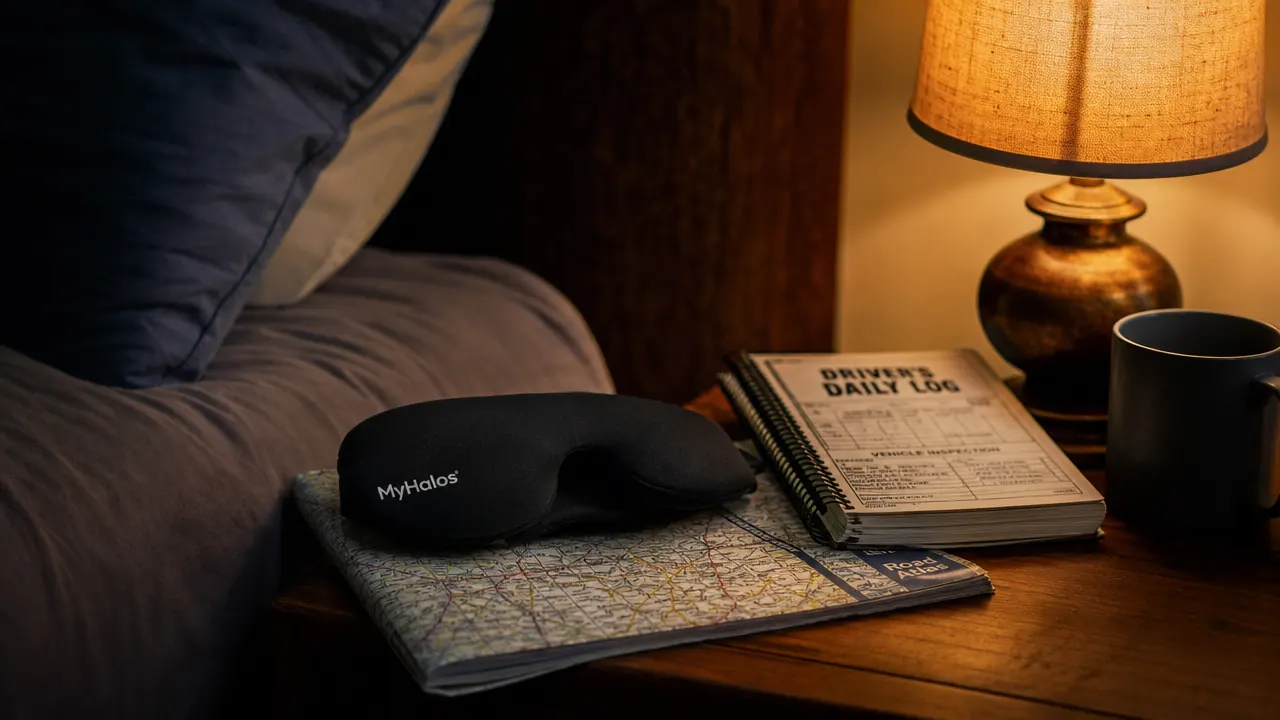
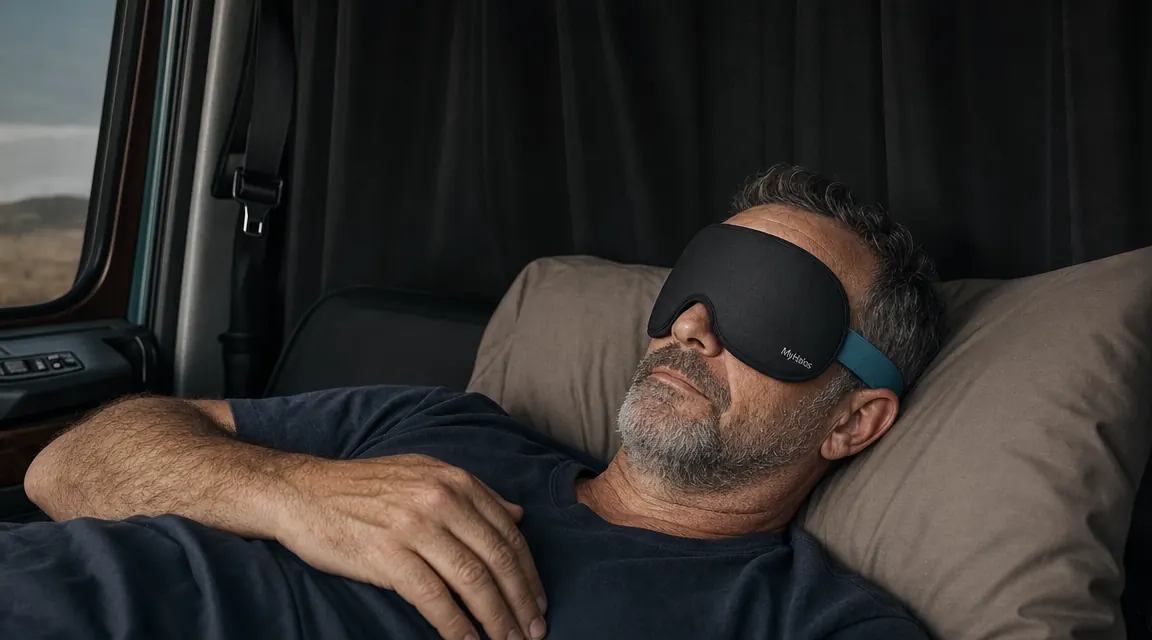
I have been hauling freight across this country for nineteen years. Albuquerque to Atlanta, Portland to Pittsburgh, and about every stretch of interstate in between. When I am not behind the wheel I am in a sleeper cab trying to grab six hours before my next run, or crashed in a motel room with a street light drilling through the curtains at 3pm. I have tried every sleep mask that trucks stops sell, every airline freebie, and a handful of the fancy ones people post about online. Most of them ended up stuffed in a cupholder by day three. The MyHalos 3D blackout mask did not. But that four-point-seven-star rating glosses over some real details that matter if you are a trucker, a side sleeper, or just someone who is thinking hard before spending even eight dollars. Let me give you the parts that 20,000 reviews tend to skip.
The Quick Verdict
Genuinely good blackout for a single-digit price, but the strap loosens, the nose gap is real for narrow faces, and side sleepers will feel the cup shift. Know what you are buying.
Amazon Check Today's Price →Your next motel blackout curtain is not going to save you. This eight-dollar mask will.
The MyHalos 3D blackout mask is the current-price leader for contoured eye coverage. No pressure on the eyelids, no light around the nose on most face shapes, and it folds flat in a shirt pocket.
Amazon Check Today's Price on Amazon →How I Actually Tested This Mask
I picked up the MyHalos mask after reading a recommendation in a trucker forum, not an affiliate blog. I wore it for ninety-four nights across four conditions: my home bedroom in Reno with an east-facing window that goes bright at six AM in summer, my truck's 70-inch sleeper cab, two separate La Quinta locations with parking-lot lights, and one stretch where I had to day-sleep in the truck for a full week running a night-shift relay. I also handed it off to my girlfriend, Diane, who runs hot and has a narrower face than me, so I could get a second data point on fit. She is the one who surfaced the nose gap issue, which I almost missed because my face is wider.
I kept a note on my phone for each night: light bleed yes or no, comfort out of ten, whether it was still on my face when I woke up, and any specific problem that came up. So this is not a one-night impression. It is three months of daily use notes compressed into one honest writeup.
The Nose Gap Problem Nobody Talks About
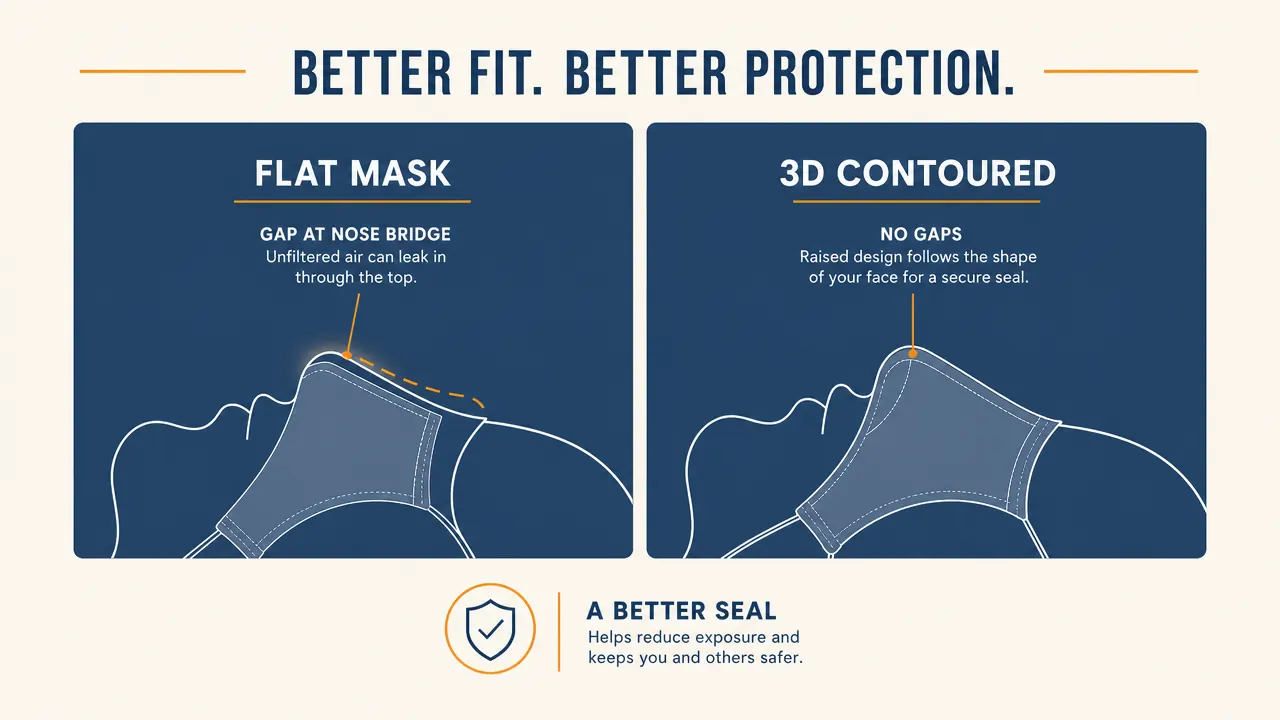
The 3D contoured design is the whole selling point. Those molded cups sit off your eyelids, which feels genuinely better than a flat mask pressing on your eyes. But the cups create a structure, and that structure has to bridge your nose somehow. On wider or average face shapes, the nose bridge piece seats itself naturally and the blackout is real. On narrower faces, the geometry does not quite close the gap, and you get a crescent of light coming in from below.
Diane, whose nose bridge is on the narrower side, could see the glow of her phone screen through the gap even when the mask felt snug. She tried adjusting the strap tighter, which pushed the top of the cups into her brow and made it uncomfortable without closing the gap. It is a geometry problem, not a strap problem. If your face runs narrow or your nose bridge is low and shallow, test this mask against a light source before committing. If you have an average or wider face, the issue probably will not come up. I never had it.
The 3D cups are the feature. They are also the limitation. The shape that works great for one face geometry can leave a crescent gap on another. This is not a flaw in manufacture. It is just physics.
What Happens to the Strap After Three Months
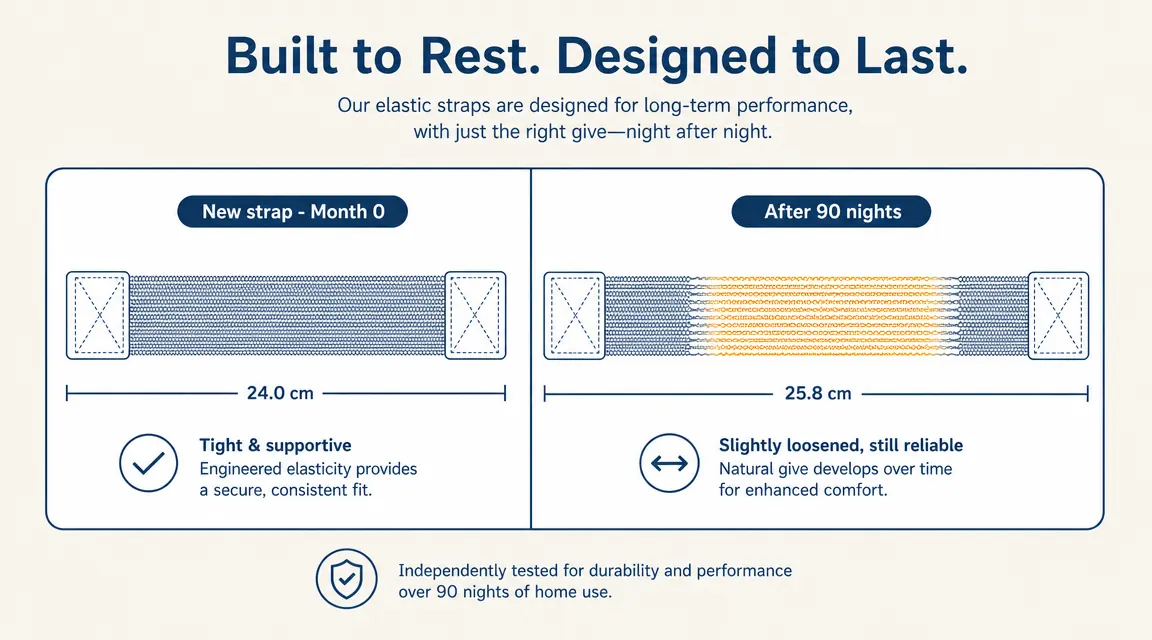
At the eight-dollar price point, nobody is promising you aerospace-grade elastic. But I want to be specific about what actually changes. At night one, the strap holds firm. The adjustment velcro is easy to set and stays put. Around the six-week mark I noticed I was cinching it one notch tighter to get the same secure fit. By the three-month point, it had stretched enough that I was at the last usable notch on the velcro overlap. The mask still works, but it no longer sits with the same confident seal it had at the start.
For most people this is a non-issue because you replace an eight-dollar mask every few months anyway, the same way you replace a cheap phone case. But if you are the kind of person who expects a purchase to last a year before you think about it again, set your expectations accordingly. The strap is the first thing to go, not the cups and not the foam. If MyHalos ever sells a replacement strap, that would solve the longevity concern entirely. As of when I am writing this, they do not.
Side Sleeping: The Cup Shift Issue
The review-a writeup on this site covers back-sleeping performance. For side sleepers the experience is different enough to warrant its own section, because most review sites do not address it. When you roll onto your side, the cup on the pillow side gets compressed against your face. That is inevitable with any contoured mask. What matters is what happens next.
With the MyHalos, the cup compresses but does not dig into my eye. The foam and the plastic shell flex enough that the pressure is tolerable. The problem is that the compression breaks the seal on that side, and you get some light in from below if there is any ambient brightness in the room. In my truck cab in the dark, this is irrelevant. In a motel with a parking lot light outside, it let in a strip of orange glow every time I rolled to my left. I adapted by positioning the mask tighter before rolling, but it took a few nights to figure that out. If you are a strict side sleeper and you are sleeping somewhere with any real ambient light, you may want to look at the comparison I did between this mask and the Manta, which handles side-sleeping fit differently.
That said, the cup-shift on the MyHalos is meaningfully better than a flat foam mask, where the whole thing just slides off your face in the night. Nine out of ten mornings the MyHalos was still on my head when the alarm went off. With the airline freebie masks I used before, I was waking up with the mask around my neck by 4am.
The Ventilation You Did Not Expect
One thing that almost never shows up in reviews is how the cups affect temperature. Flat masks create a sealed warm pocket that can get humid and uncomfortable by hour four, especially in a truck cab where climate control is uneven. The 3D cups create a small air pocket between the mask and your eyes. That pocket stays cooler because it is not skin-on-fabric the whole night. I noticed this around week two and it changed how I thought about this mask.
I am not a hot sleeper overall, but my eyes sweat under flat masks. Not badly, but enough to wake me up feeling like I had been wearing goggles for six hours. The MyHalos eliminated that entirely. The eyelid ventilation it creates is accidental but genuine. If you run warm or your eyes tend to sweat under masks, that cup gap is doing you a favor you probably did not know to look for.
The Carrying Case Is Actually Good
This sounds like a small thing but it matters on the road. The mask comes with a zippered carrying case. It is not a premium case. It is not padded leather. But it is a solid little pouch that protects the cups from being crushed when your overnight bag gets shoved into a crowded overhead bin or buried under work gear. I have had other masks arrive at their destination with the cups partially collapsed. The MyHalos case has kept the shape intact through six months of packing and unpacking.
The mask also folds down smaller than it looks like it should. With the cups nested together it fits in a front shirt pocket. For road-workers who are juggling a go-bag and do not want to dedicate a lot of real estate to a sleep accessory, that matters.
What I Liked
- Cups keep eyelids pressure-free all night, genuinely comfortable for back sleepers
- Air pocket created by the cups keeps the eye area cooler than flat masks
- Mask stays on through the night for most sleep positions
- Solid zippered case protects the cup shape in a bag
- Folds small enough to fit in a shirt pocket
- Price is low enough that replacing it every three to four months is not painful
Where It Falls Short
- Strap elastic loosens noticeably by the six-week mark; at three months you are at the last velcro notch
- Nose gap is a real problem on narrower or low-bridge face shapes; no adjustment fixes it
- Side sleepers get light bleed on the pillow-side cup when there is any ambient light
- No replacement strap sold separately; once the elastic goes, you buy a new mask
- The cups add enough bulk that it does not work well under a pillow if you like to sleep face-down
Who This Is For
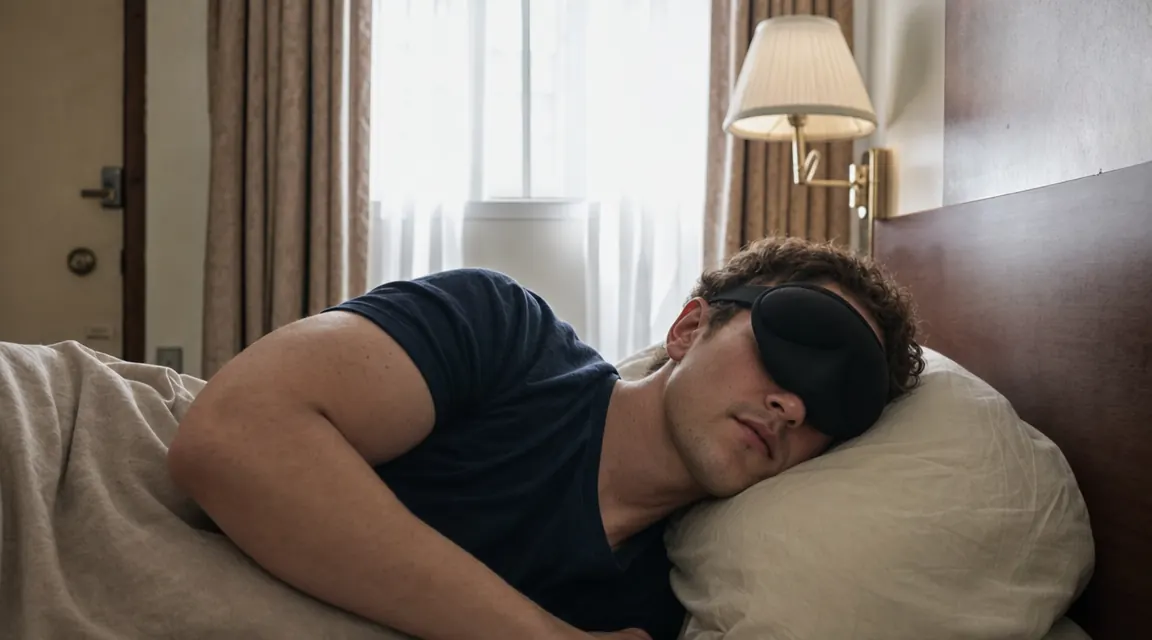
This mask was built for back sleepers and combination sleepers who sleep in environments with significant uncontrolled light, like motel rooms, dorm situations, truck cabs with thin curtains, or bedrooms that face the street. If that is you and your face runs average to wider, the MyHalos delivers genuine blackout for under nine dollars. Shift workers who are sleeping during daytime hours, truckers doing a relay run, flight attendants dead-heading home, new parents catching naps while the baby sleeps: all of these people are the real target for this product. The ventilation feature is a bonus that makes it actually comfortable for longer sleep sessions rather than just a quick nap.
Who Should Skip It
If you have a narrow face or a shallow nose bridge, Diane's experience is fair warning: try before you commit, or buy the mask knowing you may need to line the nose bridge with a piece of moleskin tape to close the gap. If you are a strict side sleeper in a room with real ambient light coming through the window, the cup-shift issue will bother you enough that spending more on a mask designed for side sleeping is worth considering. And if you are the type who wants to buy one item and have it last two years, an eight-dollar elastic strap is not going to make it that long. The MyHalos is excellent value for what it is. It is not a buy-it-for-life product.
If you are still sleeping with a flat foam mask and wondering why there is always light bleeding in at 4am, this is where you start.
The MyHalos 3D blackout mask costs less than a fast-food meal and solves a problem that has been killing your deep sleep. Check today's price on Amazon and grab a second one for the road while you are there.
Amazon Check Today's Price on Amazon →