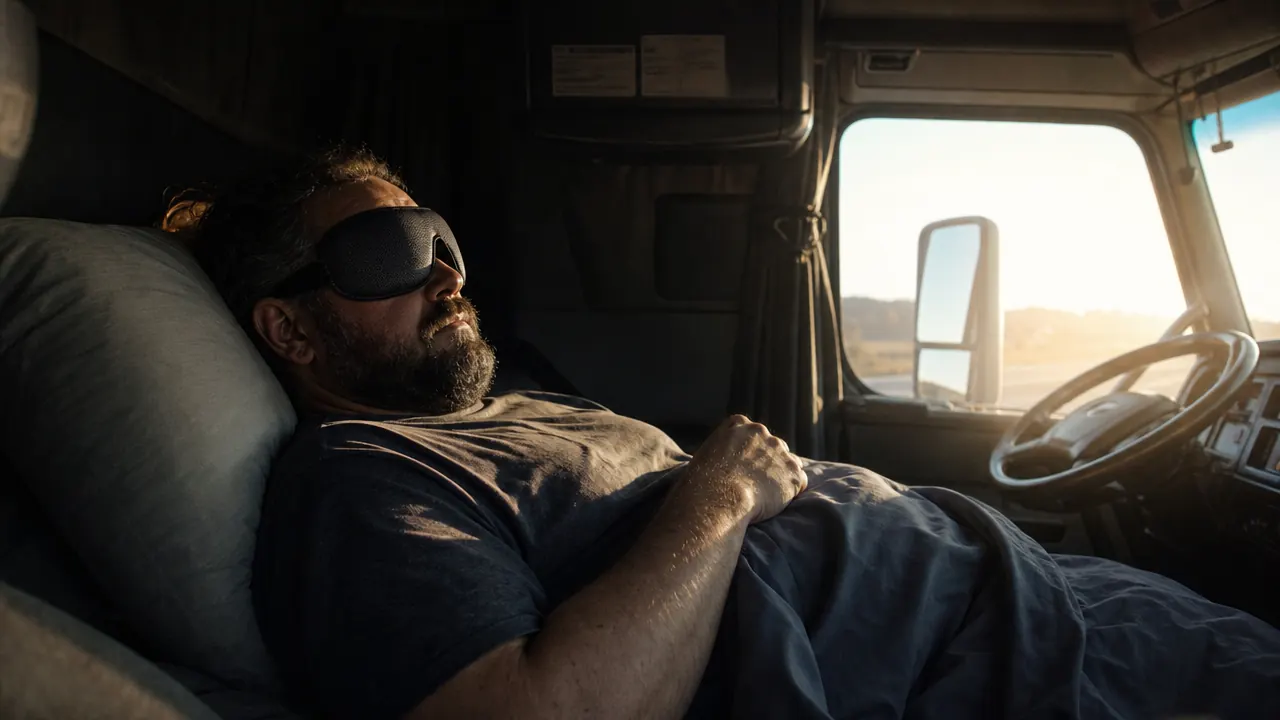
I have driven roughly 2.4 million miles across 48 states. I have slept in truck stops in Laredo at high noon, in motels in Montana where the blackout curtains had a two-inch gap letting in parking lot light all night, and in my own sleeper berth with a diesel engine idling six feet from my head. Sleep has always been a problem I was trying to solve. I spent money on supplements, ear plugs, travel pillows, and melatonin gummies. The fix that cost me less than a fast food meal was a 3D blackout sleep mask, specifically the MyHalos, and it addressed more of my sleep problems than anything else I had tried.
I know how that sounds. A sleep mask. Like something your grandma wore. But stick with me through these ten reasons, because I am betting at least four of them describe a problem you have right now and have been trying to fix the expensive way.
If light is wrecking your sleep, this is the fastest fix at the lowest cost.
The MyHalos 3D blackout mask has 20,000-plus reviews, a 4.7-star rating, and costs less than a meal at a truck stop diner. Check today's price before you read the list, because it sometimes sells out in the two-pack.
Amazon Check Today's Price on Amazon →10 Reasons a Blackout Sleep Mask Changes Your Sleep
It Blocks Light That Curtains Miss
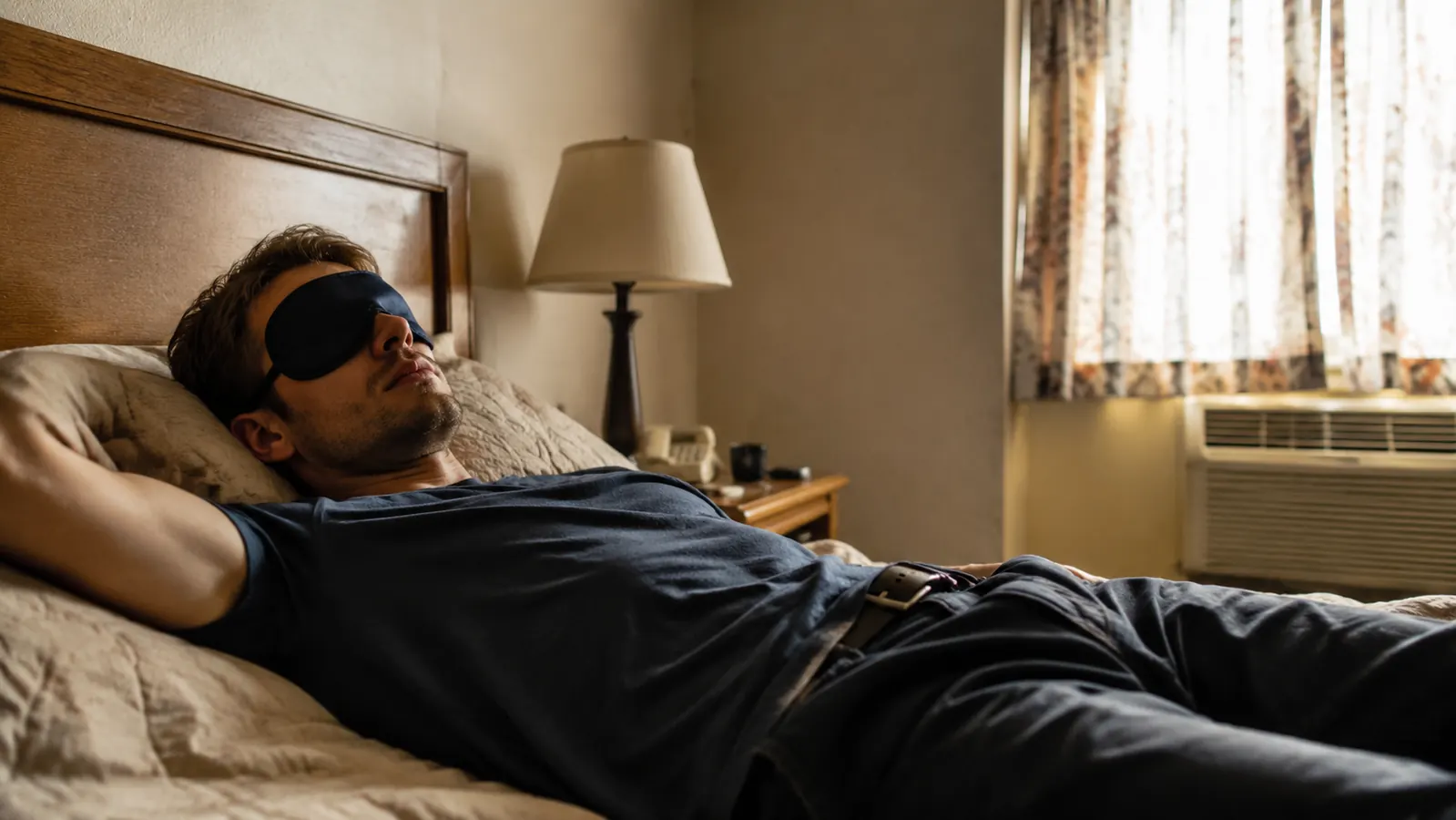
Motel blackout curtains have a gap down the middle. Bedroom blinds let in streetlight around the edges. Your eyelids at 6am do not stop sunlight. A contoured 3D mask sits over your face and seals at the nose bridge and cheekbones, so zero light reaches your eyes from any direction. I tested this in a Phoenix motel room at 11am with the curtains fully drawn. The room was dim but not dark. With the MyHalos on, it was absolute black. That is not something any curtain arrangement has ever given me on the road.
It Triggers Melatonin Production Earlier
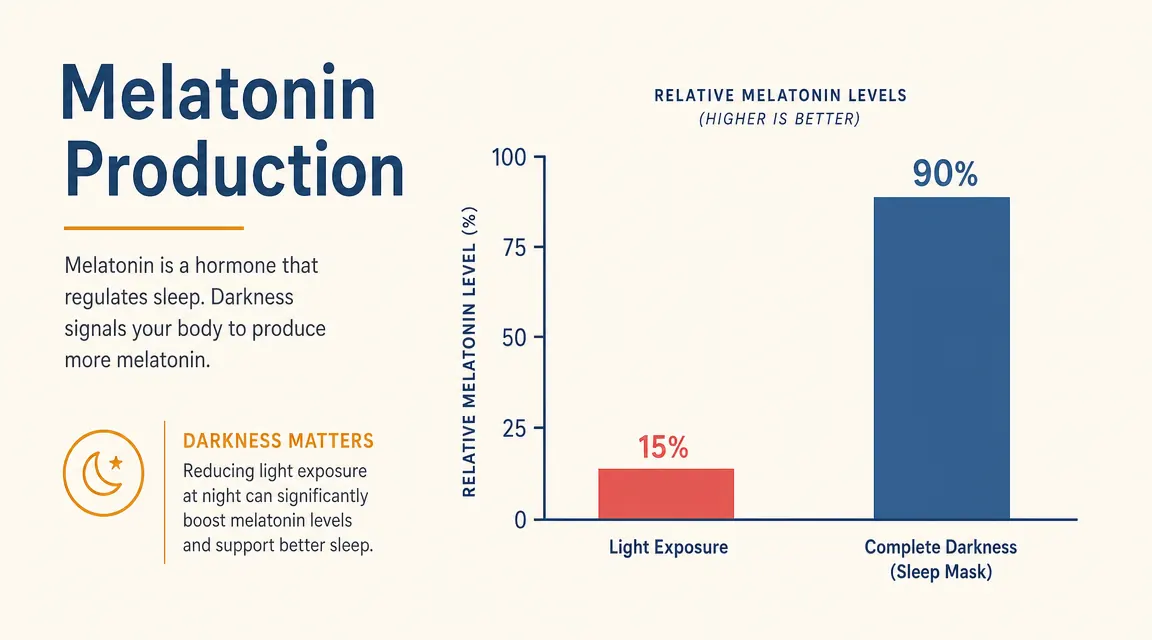
Your brain releases melatonin in response to darkness. If your bedroom has ambient light coming through your lids, your pineal gland delays that release, sometimes by an hour or more. Wearing a blackout mask signals darkness even if the room is not fully dark. This is not marketing language. It is basic circadian biology. For shift workers sleeping at noon, it is the difference between lying awake until 2pm and actually falling asleep by 12:30.
The 3D Design Means No Eye Pressure
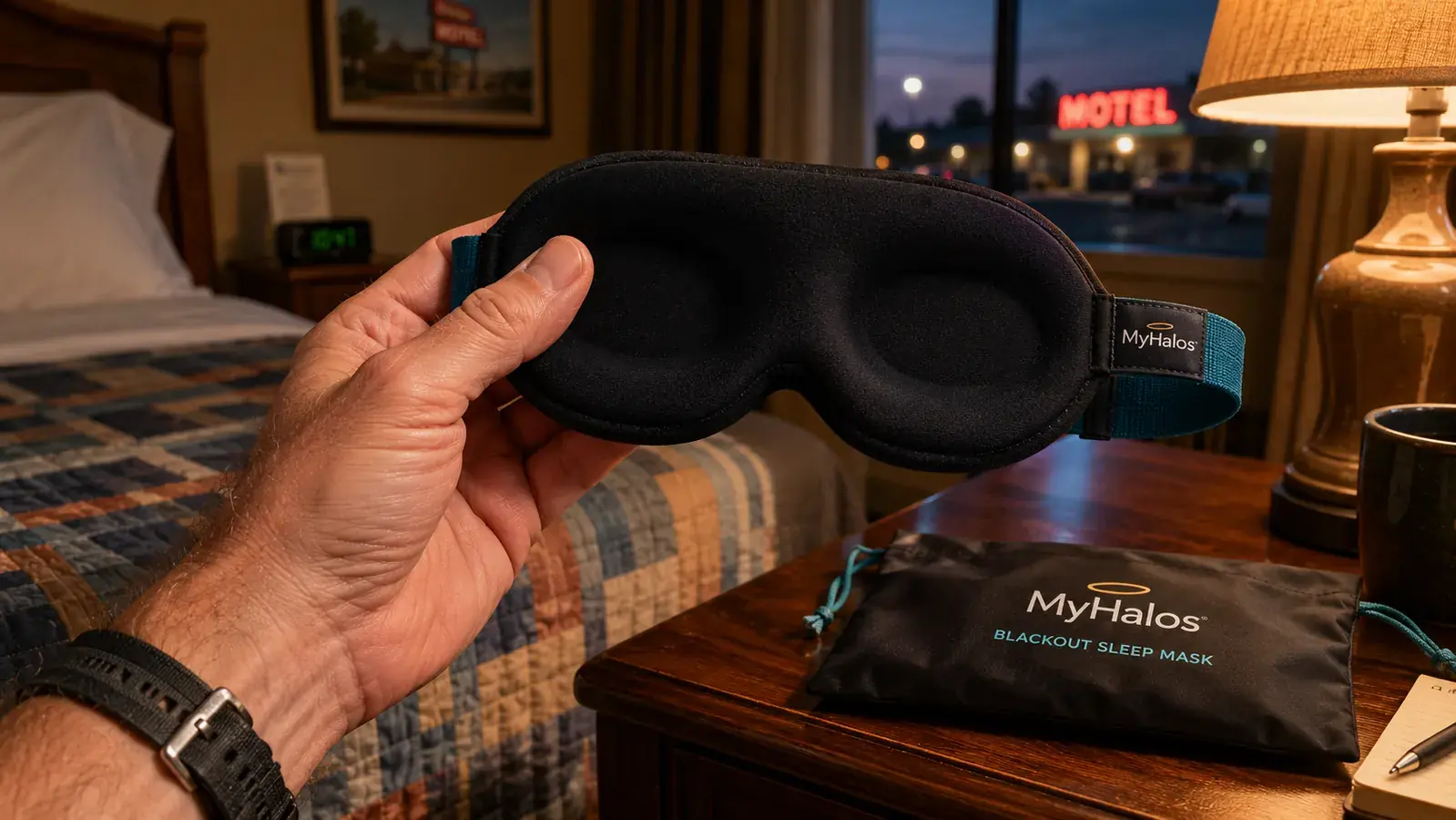
Flat sleep masks press directly on your eyelids and eyelashes. You wake up with that uncomfortable dry-eye feeling, and if you are a side sleeper, the mask shifts and lets light in at the bridge of your nose. The MyHalos uses molded dome cups that arch over your eyes without touching them. I can blink freely inside the mask and open my eyes wide. That sounds like a small thing until you have worn a flat mask for a long trip and know how miserable it gets after four hours.
It Works With Earplugs Without Coming Off
When I sleep with earplugs, I tend to toss around more because the muffled environment feels strange. Flat masks fall off during that movement. The MyHalos has an adjustable elastic strap that sits at the back of the head rather than on the ears, so putting in earplugs does not disturb it and it stays in place even when I roll. I have woken up with it still seated properly after six hours in a cramped sleeper berth. That is a reliability test most masks fail.
It Costs Very Little, Which Means You Can Buy a Spare
Most sleep tools that actually work cost real money. A good white noise machine runs in the mid range. A cooling mattress topper is in the upper range. The MyHalos is budget-friendly. At that price, I keep one in my truck kit, one at home, and I bought a two-pack so I had a backup. When the strap on the first one lost a little elasticity after four months, I swapped to the spare without thinking twice about the cost.
I spent years trying to fix bad motel sleep with supplements and curtains. A budget mask did more in the first night than either.
It Helps You Sleep Longer Without More Melatonin
A lot of people I know on the road pop extra melatonin gummies when they cannot stay asleep past 5am because of sunrise. The problem is not a melatonin shortage. The problem is light hitting their eyes at 5am and telling their brain it is morning. A blackout mask removes the trigger. I went from waking at 5:30am in east-facing motels to sleeping until 7:00am without changing my supplement routine at all. That is 90 minutes of extra sleep per night, which over a week is 10-plus hours.
It Is TSA-Friendly and Packable
I travel with a go-bag that fits in the overhead bin on the rare occasions I fly home. The MyHalos folds flat and weighs almost nothing. It does not require batteries. It does not trigger a secondary screening. I have started thinking of it the way I think about earplugs: something so small that not having it with me would be stupid. If you are a road warrior or a frequent traveler who sleeps on planes, a contoured 3D mask is worth packing over a flat one purely for comfort on a red-eye.
It Pairs With a White Noise Machine to Create a Total Sleep Environment
Light and sound are the two biggest external disruptors for most people. Address both at the same time and you have covered the main reasons you wake up during the night. I pair the MyHalos mask with the Yogasleep Dohm on my nightstand at home. The combination took me from four or five wake-ups a night down to one, reliably. Neither product alone got me there. Used together, they create a sensory environment that is close to what you would need to pay premium rates for at a sleep clinic.
Side Sleepers Get Less Light Bleed Than With Flat Masks
Side sleeping is where flat masks completely fail. When your face presses into a pillow, the side of the mask that is against the pillow gets pushed in and lifts the opposite edge off your face, letting light in. The 3D dome cups on the MyHalos hold their shape even under that lateral pressure because the cups are rigid enough not to collapse. You still get some minor light at the very edge of the nose bridge if you press your face straight into a pillow, but it is a fraction of what a flat mask allows.
It Starts Working the First Night
Most sleep interventions require a two-to-four week adjustment period. Melatonin timing has to be dialed in. Weighted blankets take a week to feel normal. A blackout sleep mask works immediately. You put it on, the room goes dark regardless of what is outside your window, and your brain has one less reason to stay alert. The first night I wore the MyHalos in a Flagstaff motel with a neon sign outside my window, I slept five hours straight, which was the longest uninterrupted stretch I had gotten in two weeks on that run.
What I Would Skip
Flat fabric sleep masks. The cheap ones that come in hotel toiletry kits or with beauty products. They press on your eyelids, slide off your face overnight, and do not seal at the nose bridge. I also would not bother with weighted or heated sleep masks for basic light-blocking purposes. They add complexity and heat to your face, which can work against sleep for hot sleepers. For pure blackout performance at the lowest cost, the 3D contoured style does the job better than anything with gimmicks built in.
If you want a full breakdown of the MyHalos with six months of wear notes, read my long-term review. And if you are dealing with noise alongside the light problem, the guide on sleeping in a bright room or truck cab covers how to combine the mask with other tools for the full setup.
Forty-eight states, two million miles. The budget mask did more for my sleep than any supplement or curtain arrangement I ever tried.
Still not sure an inexpensive mask can change your sleep? Check the 20,000 reviews and see if anyone says it did not work.
The MyHalos 3D blackout sleep mask is the first thing I recommend to other drivers when they complain about motel sleep. It is the cheapest fix that works every single night. Today's price on Amazon is usually in the budget range, but the two-pack is worth it if you travel.
Amazon Check Today's Price on Amazon →