

I spent the better part of four years fighting lousy sleep. Long-haul trucking will do that to you. Irregular schedules, parking lot diesel noise at midnight, motel pillows that feel like sandbags, and a body clock that never quite knew what timezone it was in. I tried the usual stuff: melatonin, Benadryl, chamomile tea, white noise apps. Some helped a little. None of them fixed the real problem, which was waking up at 3am and staring at the ceiling for two hours before my alarm went off.
Magnesium glycinate changed that. Not overnight, and not by itself, but it was the missing piece I had been skipping. Problem is, most people who try it do it wrong. Wrong dose, wrong timing, wrong form. They take it once, feel nothing, and quit. This guide covers what actually works, step by step, based on eight months of personal use and a lot of reading through the research on why magnesium matters for sleep in the first place.
One note before we get into it: I am not a doctor. Nothing in this article is medical advice. If you have chronic insomnia, sleep apnea, kidney disease, or any condition affecting how your body handles minerals, talk to a licensed physician before adding any supplement, including magnesium. That said, here is the practical guide I wish someone had handed me when I first picked up a bottle.
The magnesium glycinate I use every night is budget-friendly on Amazon. Over 75,000 buyers, chelated for absorption, no fillers.
Doctor's Best High Absorption Magnesium Glycinate is the form I recommend. 100% chelated, third-party tested, and the one I have used for eight months straight without a single night of stomach issues.
Amazon Check Today's Price on Amazon →Step 1: Understand Why the Form Matters Before You Buy
Not all magnesium supplements are equal, and this is where most people waste money. The most common form you will find at a gas station or big-box pharmacy is magnesium oxide. It is cheap, it has a high magnesium content on the label, and it absorbs poorly. Studies put its bioavailability around 4%. You are basically passing most of it through your gut without it doing anything, which is also why it causes diarrhea at moderate doses.
Magnesium glycinate is chelated, meaning the magnesium molecule is bonded to glycine, an amino acid. That bond makes it far easier for your intestinal lining to absorb. Glycine is also a calming neurotransmitter on its own, which means you are getting a mild sleep-supporting benefit from both parts of the compound. This is not marketing copy. It is why clinicians who recommend magnesium for sleep specifically recommend the glycinate form, not oxide, not citrate, not sulfate. If the bottle does not say glycinate or bisglycinate, look for a different one.
Step 2: Start at 200mg and Stay There for the First Two Weeks
The single biggest mistake I see in online discussions is people jumping straight to 400mg or 500mg because they read that is the clinical dose for sleep. The clinical dose is what researchers use to detect measurable effects in a study population. It is not the right starting point for your gut. A lot of people quit magnesium glycinate because they got loose stools the first week, and that is nearly always a dosing issue, not a problem with the supplement itself.
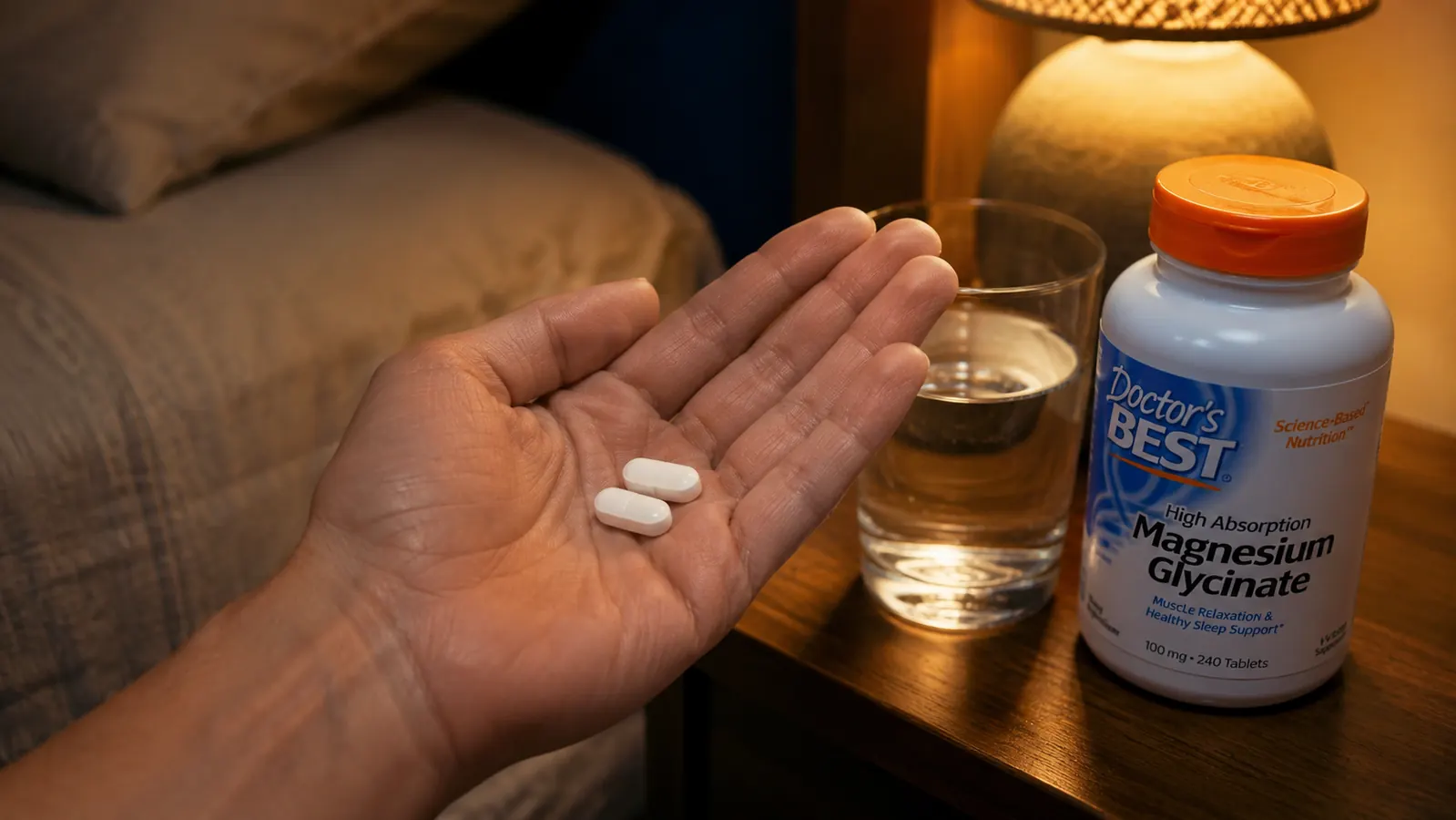
Start at 200mg elemental magnesium per night. Check the label on Doctor's Best carefully: each capsule contains 100mg elemental magnesium, so two capsules equals 200mg. Take two capsules for the first 14 days. Your gut will adjust. If you feel no digestive side effects and your sleep has not improved much after two weeks, move up to 300mg. Give that another two weeks. Most people land somewhere between 200mg and 400mg. Only go above 400mg if a physician specifically recommends it.
Step 3: Take It 30 to 60 Minutes Before You Want to Be Asleep
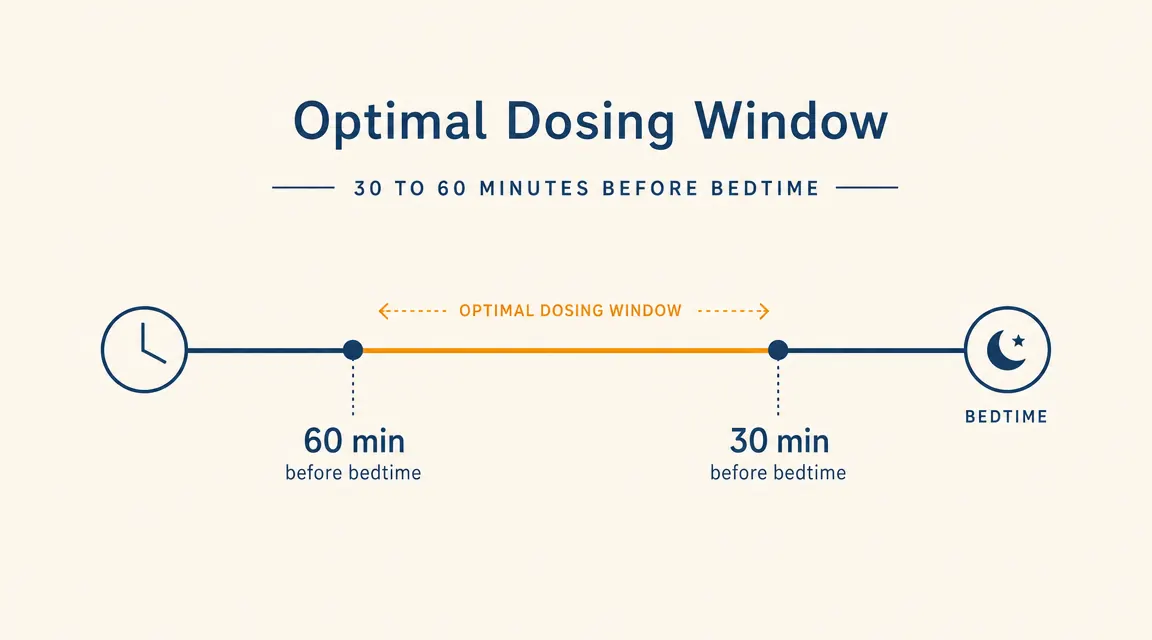
Timing matters more than most supplement guides admit. Magnesium does not knock you out the way a sedative does. It works by supporting your nervous system's natural wind-down process, lowering cortisol, and allowing GABA, the brain's main calming neurotransmitter, to do its job. That process takes a little runway time.
I take mine at 9:30pm on nights when I want to be asleep by 10:15. That is roughly a 45-minute window. Do not take it with coffee or a big meal. A small snack is fine. Water is fine. The absorption is better on a light stomach than a completely empty one, but a full dinner of fried chicken and coleslaw will slow everything down and you will not feel it the same way. Lock in a consistent time every night. Your body responds better when it starts to associate the capsules with the coming sleep window, the same way a cup of chamomile tea becomes a signal for some people. Routine matters.
Magnesium does not knock you out. It removes the static that keeps you awake. There is a difference, and once you feel it you will understand why it works when melatonin did not.

Step 4: Know What to Avoid While You Are Building the Habit
A few things will undercut magnesium glycinate's effectiveness, and I learned some of these the hard way. First, alcohol. I used to have a couple of beers after a long run, thinking that would help me sleep. Alcohol disrupts sleep architecture, cutting into the deep slow-wave sleep that magnesium is specifically trying to support. You can take magnesium and drink alcohol on the same night and feel like the magnesium did nothing. Cut the alcohol to at least three hours before bed, or skip it entirely on nights when you need real recovery sleep.
Second, high-dose zinc or iron supplements taken at the same time. These compete for the same absorption pathways in your gut. If you take a multi that includes zinc, take it in the morning and keep your magnesium glycinate for the evening. Third, and this is obvious but worth saying: caffeine. I know truckers who drink coffee at 7pm and then wonder why they cannot sleep at midnight. Magnesium glycinate is not going to override 400mg of caffeine in your bloodstream. If your half-life on caffeine runs long, which it does for a lot of people as they get older, switch to decaf after 1pm.
Also avoid high-dose vitamin D in the evening. Vitamin D supports magnesium absorption, which sounds like a good thing, but it is also mildly stimulating and works better taken in the morning with fat. Stack your magnesium glycinate in the evening, your vitamin D at breakfast, and you will get the most out of both.
Step 5: Stack It With One or Two Other Sleep Habits (Not a Dozen)
Magnesium glycinate works best as part of a small, consistent routine, not as a fix layered on top of terrible sleep hygiene. You do not need ten things. You need two or three that actually do something. Here is what I run alongside the magnesium: a blackout sleep mask for light blocking and a consistent room temperature below 68 degrees. That is it. Those three things together, magnesium glycinate, darkness, and a cool room, solved most of my sleep problems. I tried adding more supplements, more devices, more noise machines. Some of them help on the margin. None of them matter as much as those three fundamentals.
If you want to go one step further, a weighted blanket for anxiety-driven wakeups and a white noise machine if you sleep near road noise or a snoring partner are solid additions. But build the foundation first. Magnesium glycinate is a cornerstone, not a capstone. Do not pile it onto a crumbling base and expect magic.
How Long Before You See Results
This is the question I get asked more than any other. Give it two weeks before you judge it. Some people feel a difference on night three. I personally did not notice a clear change until day nine. The shift was subtle at first: I fell asleep a little faster and stopped waking up at 3am quite as reliably. By week three it was consistent enough that I could tell on the nights I forgot to take it.
If you have been severely deficient in magnesium for a long time, which is more common than most people realize because magnesium is stripped from processed foods and also depleted by stress and alcohol, it can take a full month to notice the cumulative effect. Stick with it. Set a 30-day reminder. Take your capsules at the same time every night. If after 30 days at an adequate dose you have zero change, that is the time to talk to a doctor about whether there is something else driving your insomnia.
Side Effects to Know Before You Start
Magnesium glycinate is well tolerated compared to other forms, but it is not completely side-effect free. The most common issue at higher doses is loose stools or a mild laxative effect. This is why I strongly recommend starting at 200mg. If you experience any digestive upset at 200mg, try splitting the dose: 100mg with dinner and 100mg before bed. Most people find that resolves it.
A small number of people feel groggy the next morning, especially in the first week. This usually fades after your body adjusts. If it does not, try moving your dose a little earlier, 90 minutes before bed instead of 30 minutes. On the serious side: if you have kidney disease or impaired kidney function, talk to your doctor before taking any supplemental magnesium. Your kidneys are responsible for filtering excess magnesium, and if they are not working well, supplemental magnesium can build up to levels that cause problems. For everyone else with healthy kidneys, the therapeutic doses used for sleep are considered safe for long-term daily use by most practitioners.
Which Brand to Use and Why It Matters
I have tried four different magnesium glycinate products over the past two years. Doctor's Best High Absorption Magnesium Glycinate is the one I keep coming back to. It uses the TRAACS chelated form, which is one of the most research-backed glycinate chelates on the market. The price is fair for 240 capsules, which runs most people about two months at a standard dose. No fillers I reacted to, capsules are a manageable size, and the label clearly shows elemental magnesium per capsule, which is what you want to see. Brands that list total compound weight without breaking out elemental magnesium are hiding the ball.
I am not saying other brands do not work. Pure Encapsulations and Thorne both make good products. But they cost three to four times more for comparable bioavailability. For most people starting out, Doctor's Best is the right call. It gives you the correct form at a dose you can afford to sustain for long enough to actually see whether magnesium glycinate is going to help you. Buying an expensive bottle of anything to test a new supplement is backwards.
If you are ready to try the form that actually absorbs, this is the one I use. Eight months in, still buying it.
Doctor's Best Magnesium Glycinate 400mg, 240 capsules. The TRAACS chelated form, third-party tested, no proprietary blends hiding the dose. Check whether it is still at today's price before you decide.
Amazon Check Today's Price on Amazon →