

Twenty-two years behind the wheel will do a number on your sleep. By the time I retired from long-haul trucking in 2023, I had turned waking up at 2am into a personal tradition. I knew every way to fail at sleep: cheap motel mattresses, lot lizards banging on the cab door, a circadian rhythm that looked like a flat-line EKG. What I did not know was that a budget bottle of chelated magnesium from Amazon might be the thing that finally changed the pattern.
I started Doctor's Best High Absorption Magnesium Glycinate Lysinate in October 2025. I strapped on a Garmin Vivosmart 5 and tracked every night. Eight months later I have something worth sharing. This is not a "it cured my insomnia" story. It is a real account of what 400mg of magnesium glycinate does and does not do for a 58-year-old man who spent decades destroying his sleep schedule one 11-hour haul at a time.
The Quick Verdict
Genuine, measurable sleep improvement over 90-plus days with zero side effects at 400mg. Not a miracle, but the best investment I have made in sleep in two decades of trying.
Amazon Check Today's Price →Still waking at 3am no matter what you try? This is where I started.
Doctor's Best magnesium glycinate is chelated, which means the magnesium is bound to glycine and actually absorbs. It is not the oxide junk sold at gas stations. Check today's price and see if it qualifies for free shipping on your order.
Amazon Check Today's Price on Amazon →How I've Used It: Eight Months, 400mg, One Garmin
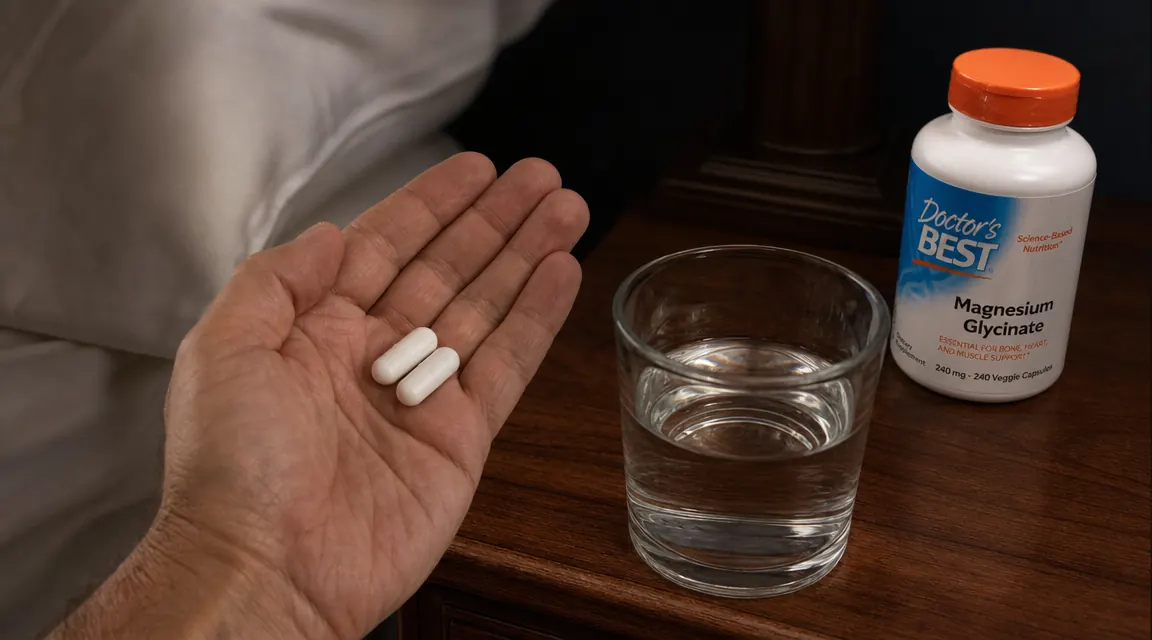
I started at 200mg the first two weeks, the dose printed on the label. I took two capsules around 8pm each night, about 90 minutes before I wanted to be asleep. After two weeks I moved to four capsules (400mg) based on a conversation with my GP, who confirmed I was not on any medications that interact with magnesium and that my kidneys were fine. I held 400mg for the remaining seven and a half months.
My Garmin tracked total sleep time, deep sleep minutes, restless periods, and what it calls a Body Battery score. I did not change my diet, alcohol intake (two beers most evenings), or exercise routine during the test period. I wanted to isolate the supplement as much as possible. I also did not take any other sleep aids during this time. No melatonin, no Benadryl, no ZzzQuil.
My bedroom setup stayed the same throughout: MyHalos blackout mask when light was an issue, the Yogasleep Dohm white noise machine running every night, and a room temperature of 67 degrees on the thermostat. I had been using those tools for six months already, so they were not new variables.
What Magnesium Glycinate Is (and Why the Form Matters)
Before I get into the data, here is what you need to know about the form. Magnesium comes in several different compounds. Oxide is cheap and has a bioavailability of around 4 percent, meaning your body absorbs almost none of it. Citrate absorbs better but has a laxative effect at higher doses that most people do not enjoy. Glycinate is chelated, meaning the magnesium molecule is bonded to glycine, an amino acid. Your intestines treat chelated minerals differently than raw mineral salts. The absorption rate runs 80 percent or higher in most studies.
Glycine itself is also calming. It is an inhibitory neurotransmitter that research shows reduces core body temperature slightly, which is one of the signals your brain uses to decide it is time to sleep. So with magnesium glycinate you are getting two sleep-relevant compounds in one capsule: magnesium, which supports GABA activity and reduces cortisol, and glycine, which nudges your core temp down. That is not marketing. That is the mechanism.
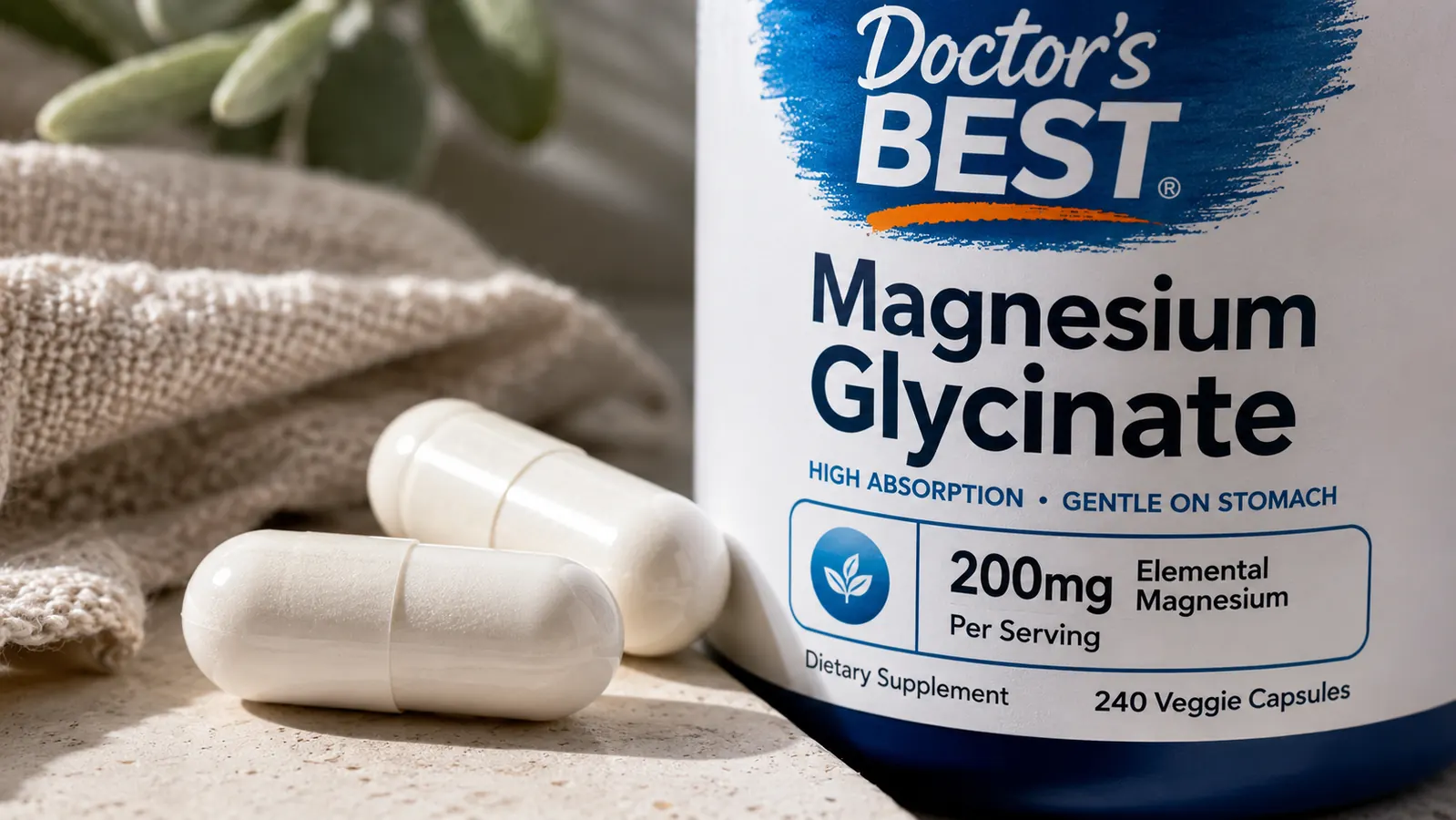
Doctor's Best uses a TRAACS-branded chelated form, which is a licensed chelation process with published safety and bioavailability data. The label says 200mg of elemental magnesium per two-capsule serving. Four capsules gives you 400mg, which is at the upper end of what most functional medicine practitioners recommend for sleep support before you start pushing toward the tolerable upper intake level of 350mg from supplements (the NIH number for supplemental mag, not dietary). I stayed at 400mg with my doctor's awareness. If you are on your own, starting at 200mg and staying there is the more conservative call.
The First 30 Days: Subtle and Easy to Dismiss
I will be straight with you. The first month I almost quit. My Garmin numbers barely moved. Average deep sleep went from 38 minutes per night to 41 minutes. That is within the margin of normal variation and I knew it. The one thing I noticed was that falling asleep felt slightly less like fighting. I used to lie there for 25 to 35 minutes doing mental inventory of every dumb thing I had said in the past decade. That window shrank to about 15 minutes on most nights.
I did not have any stomach issues at 200mg. No loose stools, no nausea. I switched to four capsules at week three and still nothing. A buddy of mine tried magnesium citrate at 500mg and spent the next morning in the bathroom. Glycinate does not do that, at least not at normal doses. That alone made it easier to stick with.

Months Two Through Four: Where the Real Change Showed Up
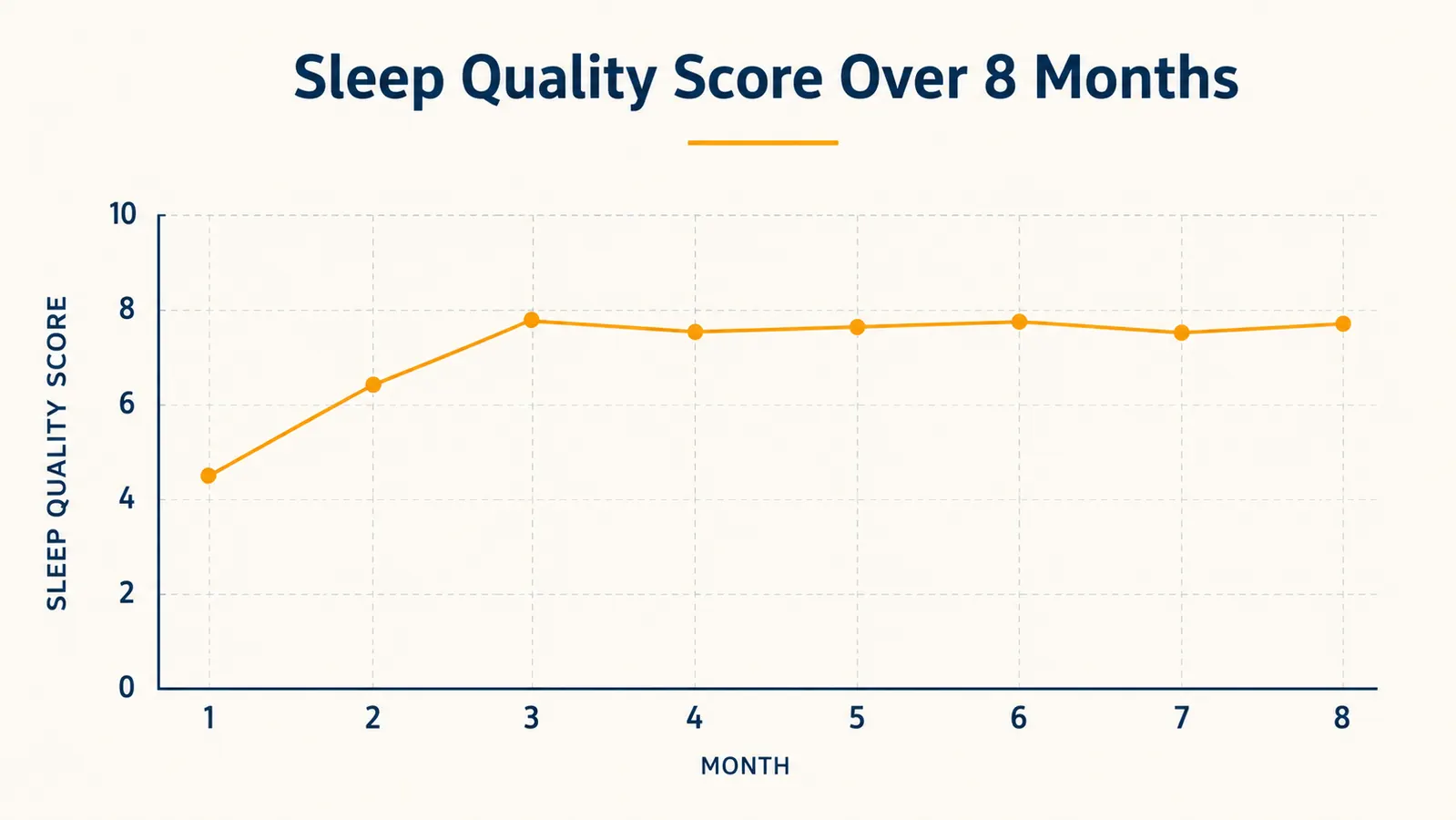
Month two is where the data started looking different. My average deep sleep climbed from 41 minutes to 54 minutes by the end of month two and hit 63 minutes by the end of month three. For context, the typical adult gets 60 to 90 minutes of deep sleep on a good night. I had been running at the floor of that range for years. Getting into the middle of normal felt like a different body.
The 3am wake-up did not disappear. But it happened fewer times per week. In the two months before starting magnesium, I woke up between 2am and 4am on 19 of 30 nights, per my sleep journal. By month three on magnesium that number was down to 7 of 30 nights. I still woke up sometimes. But most nights I went straight through.
I had been waking up at 3am more nights than not for two years. By month three on 400mg magnesium glycinate, it dropped to seven times in thirty nights. That is not a rounding error.
My Garmin Body Battery, which is a recovery score ranging from 0 to 100, averaged 52 in the baseline period. By month four it averaged 67. I started waking up without feeling like I had been run over. That sounds small. After two decades of waking up feeling like a used tire, it was not small.
Months Five Through Eight: Plateau and Maintenance
The big gains happened in months two through four. Months five through eight were about holding the ground. My deep sleep averaged 61 minutes in month five and 63 minutes in month eight. The improvement did not compound forever. It stabilized. I think that is the honest picture of what magnesium glycinate does: it corrects a deficiency effect, and once the deficiency is addressed, you get a new normal rather than endlessly better sleep.
I skipped two nights in month six because I ran out and forgot to reorder. Both nights I was back to the old pattern: longer time to fall asleep, one middle-of-the-night wake-up. That told me the effect was not placebo. Placebo does not wear off in 48 hours when you stop taking something.
One thing that did not improve: total sleep time. I still average around 6 hours and 40 minutes, which is low. Magnesium glycinate did not give me extra hours in bed. It made the hours I got more restorative. Those are different problems with different solutions.
Ingredient and Label Deep-Dive
The Doctor's Best label is clean. Each capsule contains 100mg of elemental magnesium as magnesium glycinate lysinate chelate (TRAACS). Other ingredients: modified cellulose (the capsule shell) and nothing else. No fillers, no silicon dioxide, no magnesium stearate, no artificial colors. That matters if you are sensitive to excipients, which some people are.
The capsule size is moderate, not the big horse pills you get with some supplements. I have no trouble swallowing two or four of them. Doctor's Best is NSF for Sport certified on some of their products but this specific SKU is not listed under that program at the time I am writing this. It is manufactured in an FDA-registered GMP facility, which is the baseline expectation for any supplement worth taking.
You get 240 capsules per bottle, which is 60 servings at the label dose of four capsules, or 120 servings at two capsules. At my 400mg usage that lasts two months per bottle, so I spend very little per month. That is cheaper than a single visit to a gas station for an energy drink and it actually helps.
What I Liked
- Chelated TRAACS form absorbs far better than oxide or citrate
- No GI side effects at 200mg or 400mg for me personally
- Measurable deep sleep improvement by month two in my Garmin data
- Middle-of-night wake-ups dropped from 19 to 7 per 30 nights by month three
- Clean label with no filler ingredients
- Very affordable at roughly $10.50 per month at 400mg
- Capsules are a manageable size, easy to swallow
Where It Falls Short
- Results take four to eight weeks to build, not overnight
- Did not extend total sleep time, only improved sleep quality
- The 3am wake-up did not fully disappear, just became less frequent
- Not NSF for Sport certified on this SKU
- Higher doses (above 400mg) may cause loose stools in some people
- Requires consistent daily use to maintain the effect
Alternatives I Considered Before Settling Here
Before Doctor's Best I tried three things. First was a store-brand magnesium oxide tablet from the truck stop pharmacy aisle. I took it for three weeks and nothing happened. Now I know why: the bioavailability is around 4 percent. I was basically swallowing chalk. Second was a magnesium citrate powder drink that a dispatcher recommended. It worked fine for the first two nights and then gave me loose stools every morning at mile marker 50 on I-40. Stopped that fast.
Third was a ZMA supplement (zinc, magnesium aspartate, and B6) that a guy at a truck stop was selling out of his personal supply. I am not going to say what the results were because I would not recommend buying supplements from strangers, full stop. Doctor's Best was the first product I ordered specifically because it used the chelated glycinate form and had published third-party research behind the TRAACS chelation process.
Who This Is For
Magnesium glycinate is a good fit if you are a chronic poor sleeper who has already handled the basics: consistent bedtime, dark room, reasonable temperature, no phone in your face at 10pm. If you are still sleeping with the TV on and eating pizza at midnight, no supplement will fix that. But if you have done the hygiene work and still wake up at 3am four nights a week, there is a real argument that you are running low on magnesium, especially if you are over 40, under chronic stress, or drink alcohol regularly. All three conditions deplete magnesium faster than your diet can replace it. I hit all three.
It is also a good fit if you have tried melatonin and did not love it. Melatonin changes your sleep timing but it does not address deficiency. For some people it causes vivid dreams or next-morning grogginess. Magnesium glycinate has none of those effects for the vast majority of users.
Who Should Skip It
If you have kidney disease or impaired kidney function, do not take magnesium supplements without direct guidance from your nephrologist. Your kidneys are responsible for excreting excess magnesium and if they are not working well, high intake can cause hypermagnesemia, which is genuinely dangerous. Similarly, if you are on any medications that interact with magnesium, including certain antibiotics (quinolones, tetracyclines), diuretics, or bisphosphonates, talk to your doctor first. The supplement itself is safe for healthy adults. The interactions are the risk.
Also skip it if your core problem is sleep apnea. No supplement fixes apnea. If you are waking up gasping, or if your partner says you stop breathing at night, the only solution is a sleep study and likely a CPAP. Magnesium will not help and might delay you getting the actual diagnosis you need.
Eight months in, I still buy this every two months without thinking twice.
Doctor's Best magnesium glycinate is the most straightforward supplement I have ever taken. No complicated protocol, no loading phase, no cycling. Two to four capsules at night, and you let it build over a few weeks. If you are in the same place I was in October 2025, it is worth the experiment at this price point.
Amazon Check Today's Price on Amazon →