
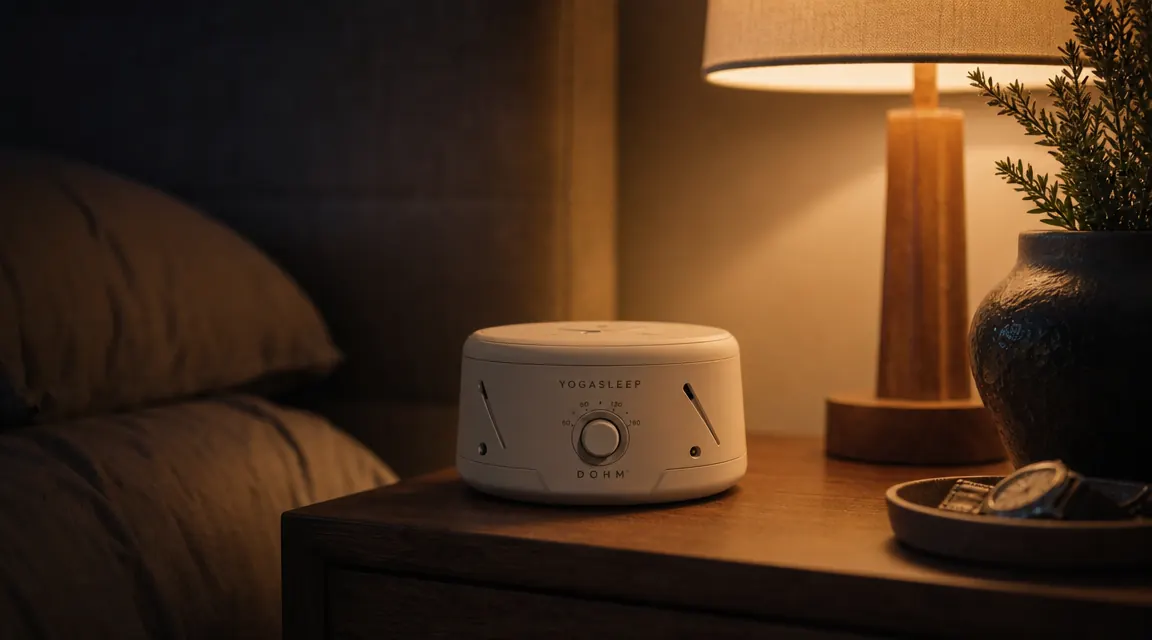
I have slept in enough motel rooms off I-40 to know that white noise is not a preference, it is a survival tool. Diesel rigs idling outside, ice machines cycling, walls so thin you can hear the couple arguing in the next room. I started carrying a white noise machine about four years ago and I have tested a handful of them since. The two that kept coming up in every trucker forum and every sleep Reddit were the Yogasleep Dohm Classic and the LectroFan Classic. Different machines with different philosophies, both priced in the same mid-range bracket.
Here is the short answer: the Dohm wins for most people, especially if you are a light sleeper or someone who wakes to unnatural sounds. But the LectroFan is not a bad machine. It just serves a different use case. I ran both through 60 nights of real-world use before writing this, and I want to give you every tradeoff before you spend the money.
| Yogasleep Dohm | LectroFan Classic | |
|---|---|---|
| Sound Type | Real fan motor, mechanical airflow | Digital audio loop, electrically generated |
| Sound Options | Continuous tone, two speed settings via twist dial | 10 fan sounds + 10 white noise variations, 20 total |
| Volume Range | Moderate range, controlled by vent opening and speed | Wide range, 10-step volume dial |
| Sound Loop | No loop, genuinely continuous mechanical airflow | Digital loop of several minutes; trained ears can detect it |
| Portability | 6 inches wide, 4-foot cord, no batteries | 4.25 inches wide, USB-compatible model available |
| Price (current) | Check today's price on Amazon | Mid-range |
| Build Quality | All-plastic housing, fan motor rated for years of daily use | All-plastic housing, no moving parts |
| Best For | Light sleepers, trucker cabs, natural-sound seekers | People who want volume control variety and digital precision |
Where the Dohm Wins
The single biggest reason to choose the Dohm is that it makes real sound. There is an actual fan inside spinning air through adjustable vents. Your brain hears genuine turbulence, not a recording of turbulence. That is not a minor distinction for light sleepers. Recordings are patterns. Even a six-minute loop is a pattern, and the human brain is wired to notice when a pattern repeats. After two or three nights with a digital machine, some people notice a subtle heartbeat or an almost-imperceptible rhythm. I did not, but a buddy of mine who hauls produce routes along the Gulf coast said the LectroFan started feeling noticeable to him around night four. The Dohm never has that problem. The airflow is governed by physics, not a file. It is the same reason rain sounds more relaxing in person than through a speaker.
The second advantage is that the Dohm has been running on nightstands since 1962. Yogasleep's parent company originally called it the Marpac Dohm, and the core fan mechanism has barely changed in over 60 years. That is not stubbornness. It is a track record. The fan motor on my current unit has been running six to eight hours a night for two years without a hiccup. The LectroFan has no moving parts, which sounds like a reliability plus, but the Dohm's simplicity means there are fewer electronics to fail. My old LectroFan developed a faint crackling noise through the speaker around month 14. It is still technically a young machine. The Dohm just runs.
Where LectroFan Wins
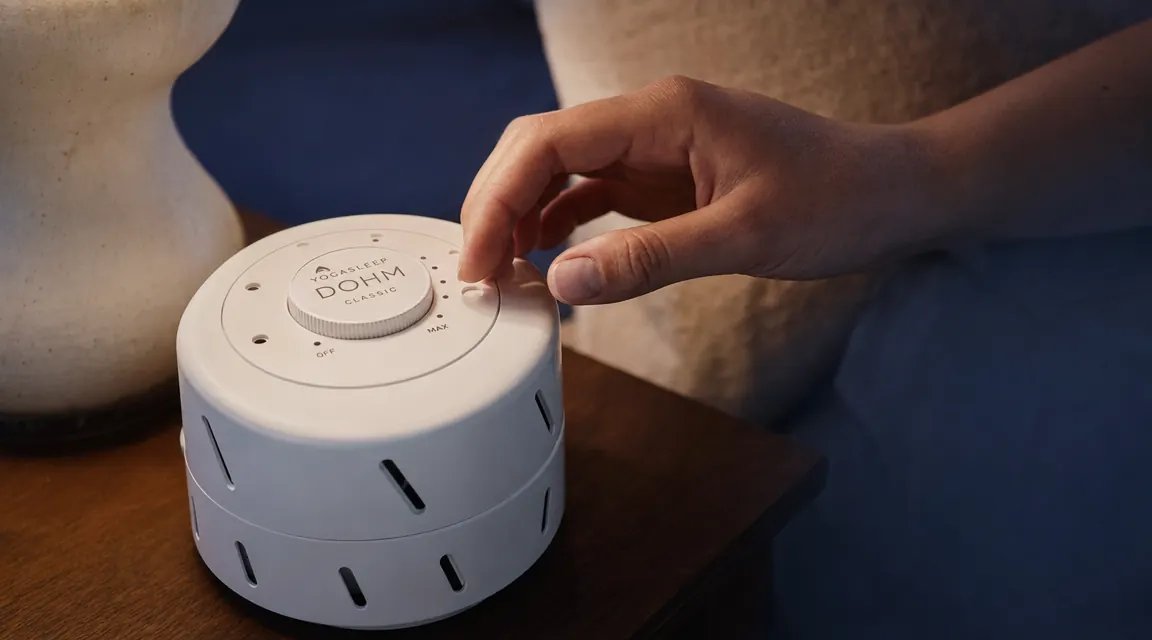
Volume control is where the LectroFan pulls ahead. The Dohm has two settings, high and low, adjusted by a speed switch on the bottom. You can also fine-tune the sound character by twisting the top housing to open or close the air vents, but the ceiling on the Dohm is fixed. In a loud motel room off the interstate, or in a house where a snoring partner is a freight train, the LectroFan can simply get louder. Its 10-step digital volume control goes meaningfully higher than the Dohm's max output. If you sleep in genuinely noisy environments and need raw volume, the LectroFan closes the gap.
The variety of sound options also matters if you are someone who cannot settle on one tone. The LectroFan has ten fan sounds (ranging from a box fan to a high-pitched electrical hum) and ten variations of white, pink, and brown noise. If the standard white noise frequency keeps you awake but a deeper brown noise settles you down, the LectroFan lets you find your exact frequency. The Dohm does not. The Dohm makes one type of sound and you dial in the character by hand. Most people end up preferring that consistency. But if you are a tinkerer or you share your bedroom with someone who needs a different frequency than you, the LectroFan gives you more to work with.
If you are a light sleeper who wakes to repeating patterns, the Dohm's real motor is the fix you have been looking for.
40,000+ buyers. Two-speed real-fan motor. The original white noise machine, still the best for natural continuous sound.
Amazon Check Today's Price on Amazon →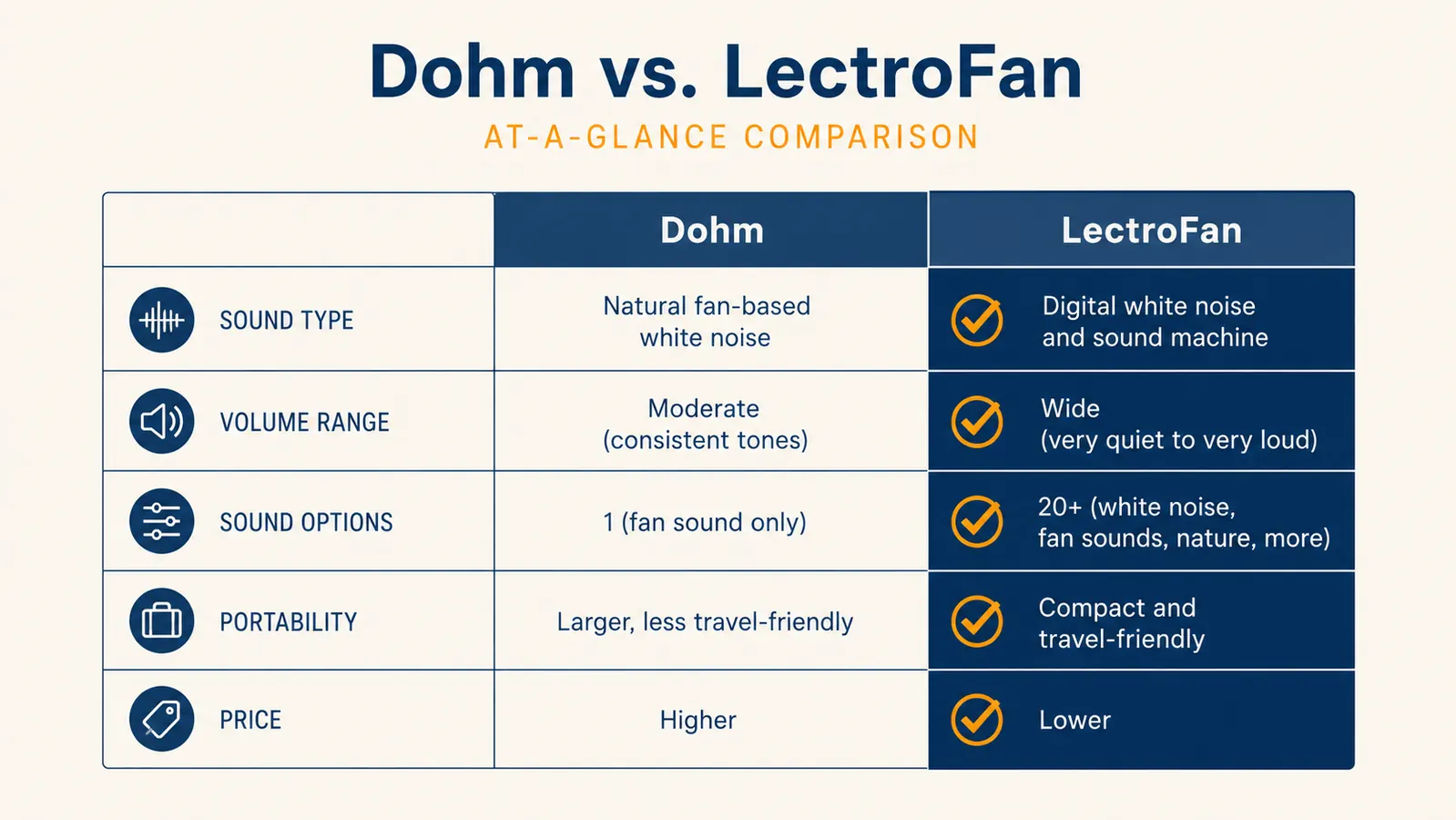
How the Real-Fan Sound Difference Plays Out in Practice
I sleep light. Always have. Eighteen years behind a wheel will do that, because your brain stays half-ready for the truck to shift or a tire to go. When I first switched from a phone sleep app to the LectroFan Classic, my sleep improved noticeably in the first week. The digital white noise was far better than silence or a phone speaker. But around week three, I started waking around 3am for no clear reason. It took me another week to pin it on the LectroFan's loop. Once I noticed it, I could not un-notice it. I switched to the Dohm that same night and the 3am wake-ups stopped within a few days.
Once I noticed the LectroFan loop, I could not un-notice it. I switched to the Dohm that night and the 3am wake-ups stopped within a few days.
That said, I want to be honest that not everyone detects the loop. I know plenty of people who have run the LectroFan for years without any issue. The loop sensitivity is real but it is not universal. If you are a sound sleeper who just wants noise coverage during a noisy travel stretch, the LectroFan is a perfectly legitimate choice. It is smaller, runs on USB, and fits in a toiletry bag more easily than the Dohm. For the road warrior who needs a machine that packs light and can run off a laptop port, the LectroFan's USB model wins that specific use case.
Sound Character: What Each Machine Actually Sounds Like
The Dohm on its low setting sounds like a window air conditioner from about thirty feet away. Steady, round, with a slight whooshing texture. On its high setting it picks up in frequency, closer to a box fan running full speed. You can adjust the tone by rotating the outer housing: more open equals more treble and airflow, more closed equals a lower, denser murmur. Once you find your setting, you set it and forget it. I have not touched mine in months.
The LectroFan on its fan settings sounds similar to the Dohm at first listen. It is a competent reproduction. The white noise modes sound more clinical, closer to what you hear in a therapist's waiting room: a steady, even hiss with less character than the Dohm's mechanical texture. That waiting-room quality is fine for blocking hotel corridor noise. It is less pleasant as a long-term nightly backdrop if your brain is searching for something organic. Pink noise on the LectroFan is arguably its best setting, sitting somewhere between white and brown with a warmer, fuller tone. If you are not married to a fan sound, that pink noise setting is worth a try.

Who Should Buy Which
Buy the Dohm if: you are a light sleeper who has noticed looping or rhythm in digital machines, you want a machine that will run reliably for years, you prefer a natural fan sound over a synthesized one, or you sleep somewhere moderately noisy where the Dohm's output is sufficient. That covers most of the people asking this question. The Dohm's 4.6 stars across 40,000 reviews is not a fluke.
Buy the LectroFan if: you sleep somewhere extremely loud and need maximum volume, you want USB portability for travel, you or your partner cannot agree on a single sound frequency and need options to cycle through, or you already know you are not sensitive to looping audio. Both are good machines. But if you are reading this article, you probably already have enough sleep trouble that you need the most reliable, most natural-sounding option. That is the Dohm.
One more practical note: the Dohm requires a standard wall outlet and its cord runs about four feet. In a motel room that is fine, but in a truck cab it depends on your inverter setup. I run mine off a 150-watt inverter without any issue. The Dohm draws under ten watts. If you are a trucker weighing these two, that is one more data point in the Dohm's favor: it is simple enough to run on a basic inverter all night without heat or power concerns.
What I Would Skip
I would skip any white noise app running on a phone speaker. I used one for about a year before I bought a dedicated machine, and it was not in the same conversation. Phone speakers are optimized for voice calls and music, not for filling a room with consistent low-frequency coverage. The sound compression artifacts alone can interrupt sleep for sensitive listeners. Spend once on a dedicated machine and stop fiddling with your phone on the nightstand. For more on using sound to block out problem noise in specific environments, the guide on blocking out noise for deeper sleep covers placement and volume strategy in detail.
I would also skip the Dohm if you have already read my full two-year review and you know your situation is on the louder end of the spectrum. In that case, check the volume numbers on the LectroFan first and see if the extra output is worth the tradeoff. The long-term Dohm review goes deeper on motor longevity and what the machine sounds like at the 18-month mark, which is a question worth answering before you commit.
The Dohm has been on my nightstand for two years. No cracks, no loop artifacts, same sound as night one.
Yogasleep Dohm Classic. Real fan motor. Two-speed twist dial. 40,000 reviews. Best natural white noise machine at any price.
Amazon Check Today's Price on Amazon →